[ad_1]

Picture by Mark Weinberg
My fellow Individuals, I do know we all know so much about pie. We take delight in being as American because the apple pies we bake for any and each event. We’ve acquired pie traditions galore at our favourite holidays. And right here at Meals52, we even dedicate every week within the fall to the flaky dessert. (Plus, who’re we kidding? Many, many different days all year long. Pie is simply the best). However, throughout the pond, they make simply as many pies, usually using a crust we’ve been sluggish to undertake stateside: the elusive scorching water crust pastry.
There’s a purpose the Brits love scorching water crust pastry. This dough has so many checks in its “professional” column. It’s a severe marvel why it’s taken us so lengthy to leap on the bandwagon. How water crust is loopy crispy, however nonetheless manages to have nice taste. However most of all, it’s tremendous sturdy. This crust does for pies what gingerbread does for vacation homes: It stays put, and holds up extremely effectively. Meaning you possibly can sort out that quaint pork pie recipe, go deep dish with out worry, or simply fill it to the brim with something—even heavy and/or moist fillings with out fear!

Sizzling Water Crust
View Recipe
Components
| 2 1/2 | cups (10.62 oz) all function flour |
| 1/2 | cup (2.12 oz) bread flour |
| 3/4 | teaspoon (Three g) salt |
| 1/3 | cup (2.66 fl oz) water |
| 1/2 | cup (4.00 oz) unsalted butter |
| 1/2 | cup (4.00 oz) lard (or shortening, should you should) |
| 2 1/2 | cups (10.62 oz) all function flour |
| 1/2 | cup (2.12 oz) bread flour |
| 3/4 | teaspoon (Three g) salt |
| 1/3 | cup (2.66 fl oz) water |
| 1/2 | cup (4.00 oz) unsalted butter |
| 1/2 | cup (4.00 oz) lard (or shortening, should you should) |
However the scorching water crust pastry recreation is a completely totally different one from the pie crust methods I’ve talked about earlier than. So earlier than you get your Nice British Bake Off on with my scorching water crust recipe, right here’s what it’s essential know:


1. Why scorching water crust?
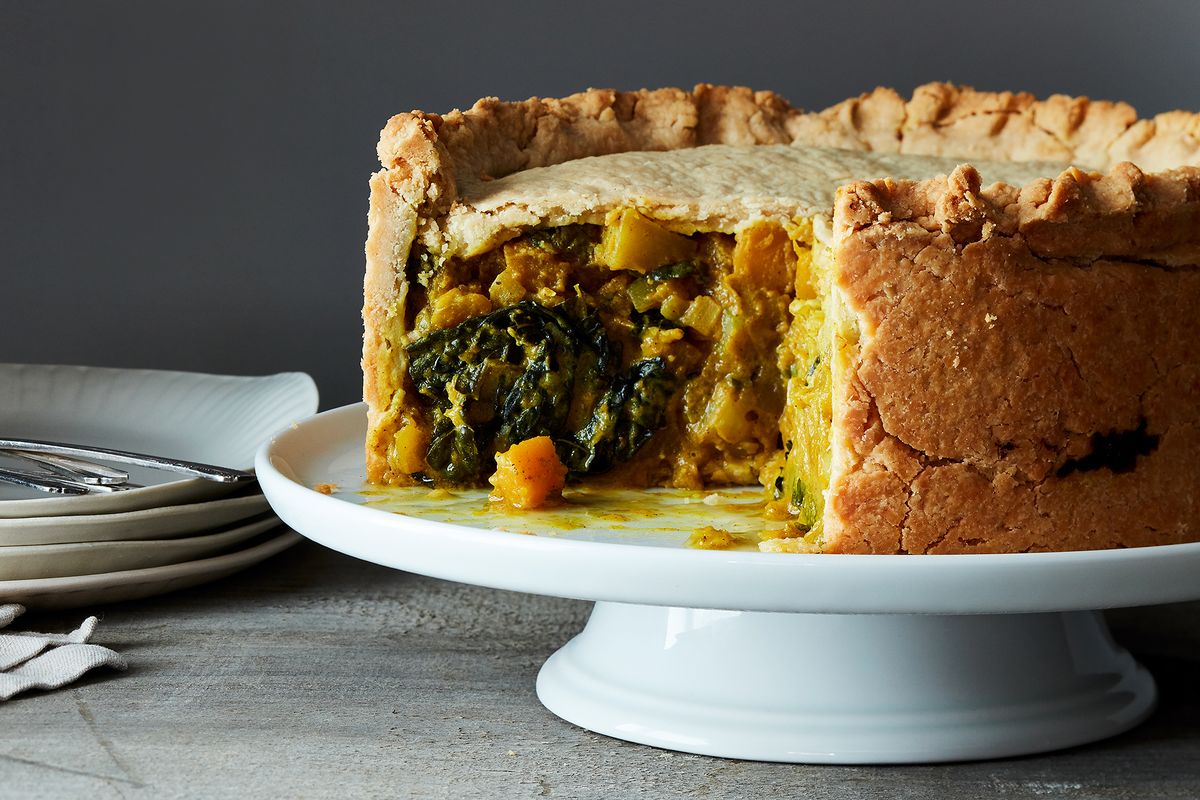
There are such a lot of variations between scorching water crust and conventional pie dough, however the primary areas to notice are texture, construction, and taste. Relating to texture, pie dough as we most frequently consider it’s flaky, crisp, and tender. Sizzling water crust is most definitely crisp—much more so than conventional pie dough. However its texture is extra crumbly than flaky and whereas it isn’t (and shouldn’t be!) powerful, it lacks the tenderness of pie dough. However this lack of tenderness has its advantages—particularly, it aids within the construction of the baked dough. Conventional pie dough is so tender, it will probably’t often stand by itself. Which is why we not solely bake it inside pie plates to permit it to encase the filling, however serve it that approach, too! Pies made with scorching water crust, however, are supposed to be unmolded. It’s fairly dramatic and yields some very spectacular pies.
One other distinction: Conventional pie dough is made by rubbing the fats into the flour and, for the perfect probability of flakiness, the fats needs to be left in massive items contained in the dough. That is scrumptious, however results in some pure inconsistencies. The fats in scorching water crust is melted and subsequently very uniformly mixed. This implies the dough, as an entire, is considerably extra uniform—and that is true of the completed baked pie as effectively. Whereas that uniformity means saying goodbye to flakiness, there are benefits. That elevated construction permits you rather more wiggle room with regards to fillings (like I discussed earlier than, scorching water crust can maintain very heavy and/or moist fillings higher than conventional pie dough). And on the flavour entrance: Conventional pie dough is often buttery and lightweight, whereas scorching water crust tends to have barely much less taste as a result of not all recipes use butter and, after they do, it’s in a smaller quantity and alongside one other fats. However since scorching water crust pies permit for a lot creativity and adaptability with the filling, I feel it’s an comprehensible commerce off. Make a flavorful filling and use the crust for what it’s: a crispy, golden vessel.

Picture by Mark Weinberg
2. The components.
The very first thing it’s best to know is the precise components in a scorching water crust are largely the identical because the components in American-style pie dough. Nevertheless, since stated components are at completely totally different temperatures and in largely totally different ratios, it ends in a completely totally different product. Sizzling water crust is made up of flour, salt, fats, and water. Not like my favourite all-butter pie dough, the recipe for warm water crust often requires a combination of all-purpose and bread flour. The bread flour is usually utilized in a smaller quantity, however its larger protein content material permits for stronger gluten improvement, which helps when it comes time to roll the crust out. The upper quantity of all-purpose flour gives the bottom construction and helps to make sure the crust doesn’t get overly powerful with all the dealing with that happens throughout mixing. Similar to flaky pie dough, scorching water crust can use any variety of fat, however lard is the best choice due to its larger melting level, which ensures that the crust will get crisp. It must be famous the ratio of fats in scorching water crust is a bit larger than in conventional pie dough, and with that bigger ratio comes a bit of wiggle room. I like to make use of half butter and half lard—giving me the advantages of the upper melting level with the addition of loads of taste due to the butter. You may also go for shortening (both in lieu of the lard and/or butter). Lastly, the namesake of this crust: the new water. The new water is essential for reaching the right texture and construction within the dough. Learn on for extra particulars.

Picture by Mark Weinberg
3. Mixing + kneading.
In case you’ve learn any of my previous pie articles, you’ll know I’m continuously shouting from the rooftops about all the things being chilly, chilly, chilly. However, not surprisingly, scorching water crust is the other. The water (and fats!) are scorching, and the crust will not be solely combined up with heat components, however must be used whereas it’s nonetheless retaining warmth, as that’s when it’s most pliable. Why does this work? Utilizing scorching water and melted fats permits for a better ratio of liquid for use, which ends up in a crispier crust. Sizzling liquid hydrates the flour sooner throughout mixing, and ends in a easy, pliable dough. As soon as the dough hits the oven, the moisture evaporates, and the crust will get crispity crisp. (In case your crust appears a bit of greasy, let it bake a bit longer till golden.) Utilizing melted fats means the fats is distributed extra evenly, making certain the crust is not going to solely be easy and uniform, however will brown evenly throughout baking.

The very first thing it’s essential bear in mind about making scorching water crust is it’s a must to use it whereas it’s scorching. This implies earlier than you make your crust, it’s best to have your pan and your filling able to go. To combine the new water crust, combine the dry components collectively in a big bowl. It’s sensible to make use of one which’s warmth secure (steel or heat-treated glass) as a result of you may be including very popular liquid to it. Have your software of selection prepared: I like to begin with a fork, then change to a picket spoon or silicone spatula. You’ll even be kneading it fairly a bit together with your palms – so should you’re delicate to warmth, chances are you’ll need to have a pair of disposable gloves on the prepared. Begin by heating the water—you need to deliver it to a boil, however you additionally don’t need it to boil for a very long time (you’ll mess with the ratio if an excessive amount of evaporates). Convey the water to a simmer and have your fats(s) prepared and ready, When the water involves a boil, add the fats to the pot and stir till it’s melted.* The liquid ought to nonetheless be very popular. If it isn’t, flip the warmth again on and produce to a mild simmer—once more, not for too lengthy, simply sufficient to verify it’s good and scorching.
Pour the new liquid and fats into the flour combination and blend till the combination is mixed. It is going to look fairly shaggy and never completely uniform. As soon as it’s mixed, it’s time to knead. Kneading is essential to reaching a easy dough and construct extra gluten to assist in giving the crust extra energy. Keep away from including an excessive amount of extra flour throughout kneading. In case you should, use a lightweight dusting on the floor and your palms, however know added flour will alter the ratio and in addition will decrease the temperature of the dough. The size of time it takes to knead the dough might differ, however don’t overdo it. You need the dough to look easy, however nonetheless have warmth. In case you combine too lengthy, the dough will start to chill down, and it’ll grow to be tougher to deal with if you go to roll it out.
*Be aware: Some recipes for warm water crust additionally incorporate the fats by rubbing it, or a portion of it, into the flour simply as you’d conventional pie crust. I discovered that melting it’s not solely simpler, however produces a extra uniform crust. So don’t panic in case your favourite recipe has totally different directions. Totally different crust strokes for various pie people.

Picture by Mark Weinberg
4. Dealing with the dough.
Dealing with scorching water crust is essentially the most tough half about the entire course of, however it’s nonetheless past doable, particularly when your approach round. The entire course of will get simpler the extra occasions you do it. I’m definitely not attempting to scare anybody off with this warning. As an alternative, I simply need to arm you with the data that YOU CAN DO IT (!!!)—and will catastrophe happen, there are inbuilt alternatives to rectify errors. Sizzling water crust must be very pliable, however it additionally tends to tear or tear. Keep in mind what I stated earlier about including an excessive amount of extra flour throughout kneading? That may positively nonetheless be an issue at this stage—much more so as a result of because the crust will get thinner, extra flour will deliver down the temperature sooner. You may find yourself with a dry-ish dough that’s now not simply pliable. No good!
Due to this, I discovered that the simplest option to roll out the dough is between two sheets of plastic wrap or parchment paper. This gives tear insurance coverage by serving to to forestall the dough from sticking to the floor without having so as to add an excessive amount of further flour. Keep in mind to peel away the paper/plastic often. This permits the dough loosen up a bit so it may be rolled out additional. The identical goes for flipping the dough over (which means making the underside piece of paper/plastic now be the highest—peel it away, then preserve going). Roll the dough out to about 1/Four inch thickness. You don’t need to go tremendous skinny with scorching water crust, so keep away from 1/eight inch. You need that thicker construction.

Picture by Mark Weinberg
As you roll, should you wrestle with tears or holes, merely patch them with some scrap dough earlier than persevering with. That is a lot simpler to do with scorching water crust than it’s with conventional pie dough, so don’t fret should you face this dilemma! When you’ve reached the proper thickness, you possibly can form the dough as desired. For small pies or different freeform shapes, simply reduce the form you need out of the dough with a cutter or paring knife. In case you’re lining a pie plate, use the plastic/parchment you rolled on that will help you transport. Peel the highest piece away from the dough, then use the underside piece that will help you flip it into the pie plate. The deeper the pie plate, the extra seemingly you’re to have rips or create holes. Nonetheless, don’t fear! Simply patch these up and do your finest to verify any added dough is sealed very effectively. Keep in mind to work shortly—the dough might be cooling down each second you’re employed with it. However, additionally, don’t really feel like it’s a must to rush! It ought to retain the warmth effectively sufficient to finish this course of comfortably.
*Different word: Sizzling water crust can really be used like a press-in crust as effectively, although it’s tougher to get it to look as good and easy this fashion. However should you wrestle to roll it out, you possibly can be happy to skip rolling and at all times go for this—it really works very effectively should you take the care to verify it’s even.
5. Filling.
Filling the dough is the simplest half. Simply take care to verify there are not any holes in your crust. This causes leakage, creates burnt spots, and destroys the structural integrity, making it tougher to unmold the pie finally. As a result of your crust itself is scorching, you don’t even want to fret about cooling cooked fillings earlier than you add them to the crust. That being stated, should you make a scorching filling, it can cool a bit whilst you put together the crust, and that approach you aren’t including a piping scorching, fresh-from-the-stove filling to the crust.

6. High crust + venting.
In case you’re making a double crust pie, you’ll need to deal with the dough precisely the identical as you probably did with the bottom. It must be famous should you’re making a deep dish pie, you’ll want rather more dough to cowl the bottom than you’ll to cowl the highest, so divide the dough into one part that’s 2/Three of the dough for the bottom and one other that’s 1/Three for the highest. Use your parchment or plastic that will help you place the crust once more. It’s finest to deal with as fastidiously as doable, as a result of it’s understandably harder to patch errors on the highest crust than it’s on the perimeters. As soon as the highest crust is on, use your fingers to pinch the sting of the highest crust to the aspect crust as finest you possibly can. This helps them kind a seal. You are able to do conventional crimping very simply with scorching water crust, and it’s more likely to carry its form throughout baking than flaky pie dough. Crimp your edges as desired—this may assist assure the crusts are sealed collectively and the filling received’t escape.
Relating to venting, it’s conventional to poke holes in a scorching water crust as a substitute of slicing slits with a knife. To poke a gap, use the rounded deal with of a picket spoon and press straight downward into the crust till you hit filling. This bigger vent ensures loads of steam can escape and in addition helps preserve the form of the highest—the filling is unlikely to leak out, so the crust will keep flat.

Picture by Mark Weinberg
7. Baking.
Baking scorching water crust pies is just like baking different pies, with a number of noteable exceptions. Typically talking, the oven temperature may be extra average. You don’t want the extreme warmth to evaporate moisture within the fats shortly to create flakiness. As an alternative, you need the pie to brown progressively, and it’ll proceed to crisp up the longer it’s within the oven. My most well-liked temperature for many scorching water crust pies is 375°F. Egg washing is elective, however does assist to make sure even browning on the floor of the pie – plus a beautiful sheen. Bake till the pie may be very golden. Underbaked pies will lack crispness. And, truthfully, who needs that?
Sizzling Water Crust
View Recipe
Components
| 2 1/2 | cups (10.62 oz) all function flour |
| 1/2 | cup (2.12 oz) bread flour |
| 3/4 | teaspoon (Three g) salt |
| 1/3 | cup (2.66 fl oz) water |
| 1/2 | cup (4.00 oz) unsalted butter |
| 1/2 | cup (4.00 oz) lard (or shortening, should you should) |
| 2 1/2 | cups (10.62 oz) all function flour |
| 1/2 | cup (2.12 oz) bread flour |
| 3/4 | teaspoon (Three g) salt |
| 1/3 | cup (2.66 fl oz) water |
| 1/2 | cup (4.00 oz) unsalted butter |
| 1/2 | cup (4.00 oz) lard (or shortening, should you should) |

Curried Kale, Pumpkin, and Potato Pie
View Recipe
Components
| 2 | tablespoons olive oil |
| 10 | shallots, chopped |
| 1 | bunch scallions, chopped |
| 1 | tablespoon curry powder |
| 1 | tablespoon cumin |
| 2 | teaspoons coriander |
| 1 | teaspoon turmeric |
| 1/2 | teaspoon cayenne pepper |
| 1 | teaspoon cinnamon |
| 1/2 | teaspoon ginger |
| 6 | cups peeled and cubed pumpkin (or squash) |
| 1 | massive russet potato, peeled and cubed |
| 4 | cups vegetable broth |
| one | 12 ounce can coconut milk |
| salt and freshly floor black pepper | |
| salt and freshly floor black pepper, to style | |
| 1 | massive bunch lacinato kale, roughly torn |
| 1/4 | cup recent chopped cilantro |
| 1/4 | cup recent chopped mint |
| 1 | recipe Sizzling Water Crust (https://meals52.com/recipes/64572-hot-water-crust) |
| 2 | tablespoons olive oil |
| 10 | shallots, chopped |
| 1 | bunch scallions, chopped |
| 1 | tablespoon curry powder |
| 1 | tablespoon cumin |
| 2 | teaspoons coriander |
| 1 | teaspoon turmeric |
| 1/2 | teaspoon cayenne pepper |
| 1 | teaspoon cinnamon |
| 1/2 | teaspoon ginger |
| 6 | cups peeled and cubed pumpkin (or squash) |
| 1 | massive russet potato, peeled and cubed |
| 4 | cups vegetable broth |
| one | 12 ounce can coconut milk |
| salt and freshly floor black pepper | |
| salt and freshly floor black pepper, to style | |
| 1 | massive bunch lacinato kale, roughly torn |
| 1/4 | cup recent chopped cilantro |
| 1/4 | cup recent chopped mint |
| 1 | recipe Sizzling Water Crust (https://meals52.com/recipes/64572-hot-water-crust) |
Erin McDowell is a baking aficionado, author, stylist, and Meals52’s pie guide at massive.
Have you ever ever made scorching water crust? Tell us within the feedback!
[ad_2]
Supply hyperlink